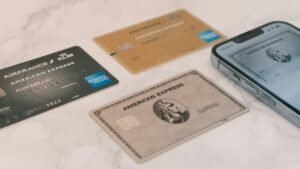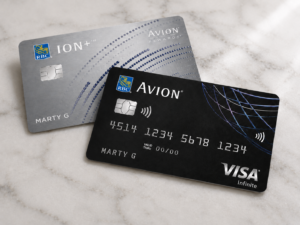
If you’ve read my previous articles, you’ll know that American Express MR earning cards and Avion or Aeroplan VISA cards are the best to use for travel rewards.
Notably absent from that discussion is Mastercard. So why is this a problem?
Costco is a go-to store for many Canadians and, for plenty of households, functions as their primary grocery stop. It reliably sells quality products, offers household staples in bulk at reasonable prices, and is especially useful for families. I’m a big fan.
The problem is that Costco Canada only accepts Mastercard in-store. That creates a real issue for points collectors because many of the strongest rewards cards in Canada are American Express or Visa.
Costco.ca does accept Visa, which creates some potential workarounds for those who are motivated. But if you are walking into a physical Costco warehouse, you need a Mastercard.
There is one more important wrinkle: Costco does not code as a grocery store. That means you will not earn grocery category multipliers at Costco. You will earn the base rate of whatever card you choose.
So, what should you use?
I’ll discuss 5 relatively simple solutions and 3 slightly more advanced options.
Ultimately, which solution you choose will depend on 3 factors:
- your reward or travel goals
- the amount of your Costco spend
- how much effort you are willing to put in

1. The Cash Back Option
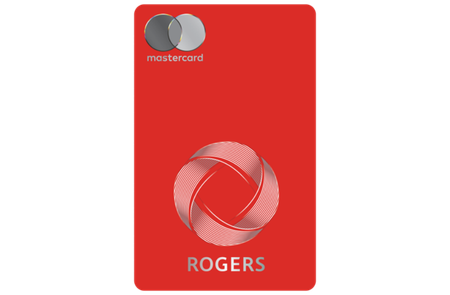
I am not the biggest fan of cash back. But I’m not going to let my travel bias get in the way of objective math. Costco is one scenario where cash back can make sense, especially if your Costco spend is on the lower end, say under $750 per month.
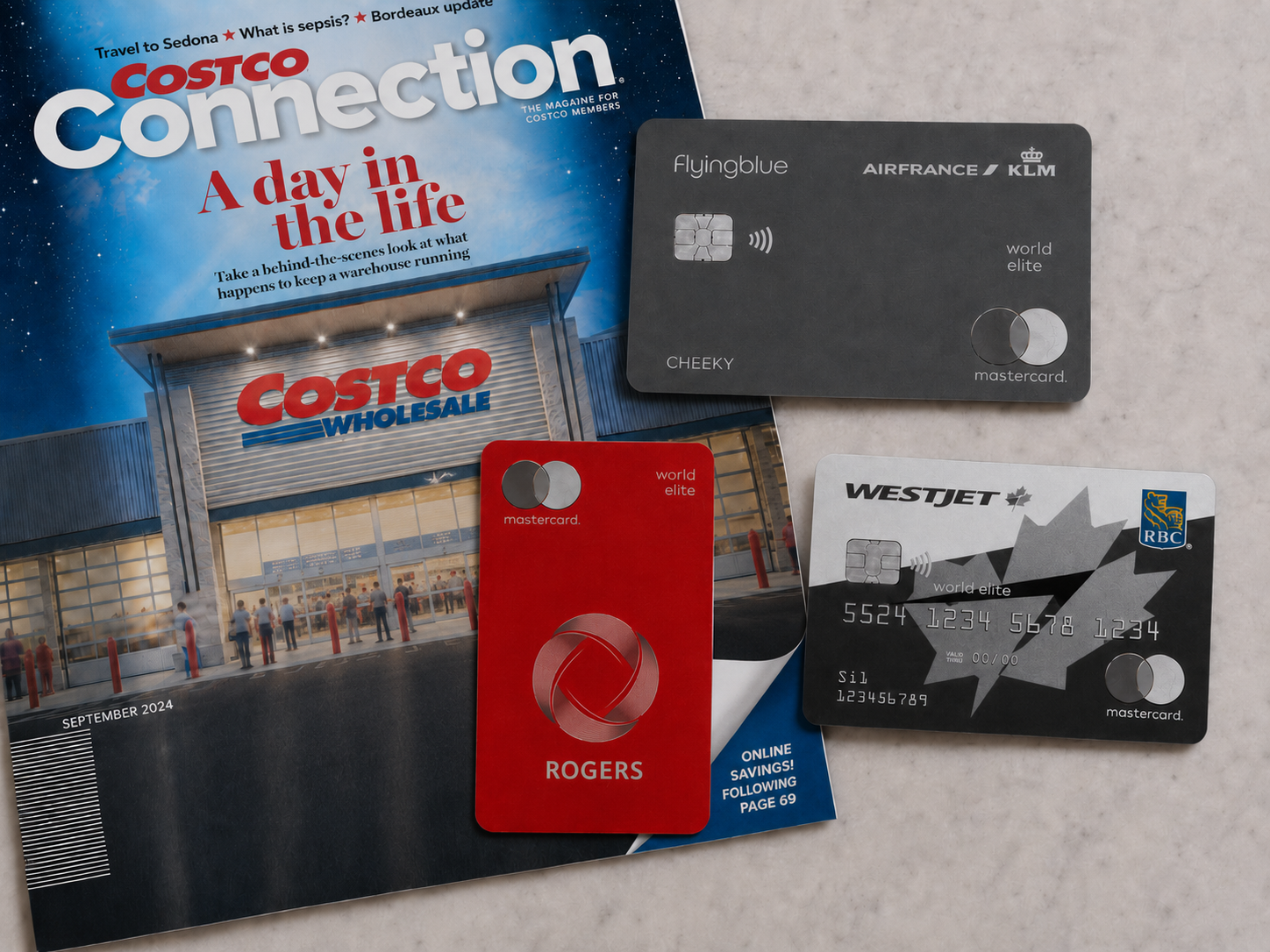
The best cash back option is the Rogers Red World Elite Mastercard. This card has no annual fee, a key reason for its mathematical success, and a base cash back earn rate of 1.5%. If you are a Rogers, Fido, or Shaw customer, the cash back earn rate is 2%.
As someone who favours travel points cards, why am I recommending you consider a cash back card at Costco?
The travel cards I recommend like the Amex Cobalt or RBC ION+ card and others all have some combination of high multipliers (5x or 3x in useful categories like groceries and gas) and useful perks or benefits and these do beat out cash back cards every time.
However, the Mastercards that can be used at Costco, for the most part, don’t have perks or benefits and because Costco is considered a warehouse, they only earns at base rate of 1x. If these were the only factors, a points card that earns at 1x but is worth 2cpp (as many travel points are) would still at least match a 2% cash back card. But there’s one more consideration. The annual fees.
Because the Rogers World Elite Mastercard has no annual fee, there is no spending hurdle you must surpass to make back the annual fee. But with all of the Mastercards that earn travel points, there is an annual fee, so you have to have sufficiently high spend to make up for the annual fee and surpass it.
This is why cash back is a reasonable consideration in this one scenario, especially if your Costco spend is on the lower end.
I’ll show you the math after we discuss one of the better travel rewards Mastercards next.

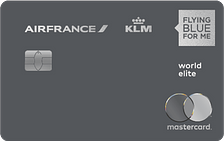
2. Brim Air France KLM Flying Blue Mastercard
I’m based in Toronto, and one of my travel goals is to see more of Europe.
Aeroplan would be an obvious points program to collect for that goal, but there are no Aeroplan Mastercards in Canada.
Thankfully, there is another excellent option: Flying Blue miles.
Flying Blue is the loyalty program of Air France and KLM (which is part of the SkyTeam alliance). It is one of the most useful programs for Canadians who want to fly to Europe, especially from Toronto, Montreal, Vancouver, Calgary, Edmonton, Ottawa, and Quebec City which all have direct flights serviced by Air France or KLM.
Flying blue is also the best way to book WestJet economy flights using points. This is one of the anomalies of points and miles that only those who are interested in travelling on points learn about and exploit.
Pricing of WestJet economy flights on Flying Blue is generally quite low. And children age 2-11 get a 25% discount on the points price of the flight so this is a great way to travel as a family.
As an example, a WestJet economy round trip flight from Toronto to Cancun during March break peak season can be as low as 29,000 Flying Blue miles (plus $245 in taxes/fees).
We did this for our last March break trip. For our family of four with 2 kids under 11 years old, it cost 101,500 Flying Blue miles (29,000 for each adult and, with a 25% discount for both kids, 21,750 for each child) and $980 in taxes/ fees. The cash cost of a similar economy flight was ~$6,000. So the ~100,000 FB miles saved us about $5,000. That was a 4.9 cent per point redemption. Even if those points were earned on a 1x earning card, that’s like getting 4.9% cash back.
Keep these numbers in mind for when we discuss the RBC WestJet World Elite Mastercard that earns WestJet points a little later (spoiler: using Flying Blue Miles is better than using WestJet points for WestJet flights!).
This makes the Brim Air France KLM Flying Blue World Elite Mastercard very interesting.
This card earns:
- 1 Flying Blue mile per dollar on everyday purchases
- 2 Flying Blue miles per dollar at restaurants and bars
- 5 Flying Blue miles per dollar on Air France and KLM purchases
So your Costco spend will earn the base earn rate of 1x Flying Blue miles per dollar. Though this doesn’t seem very strong, remember that when you redeem FB miles for peak season WestJet economy flights or transatlantic business class flights on Air France or KLM to Europe, you very easily will get anywhere from 2 to 5 cents per point. That means the card earns you the equivalent of 2-5% cash back.
And because the card earns Flying Blue miles, there is natural synergy with Amex MR earning cards which can transfer to Flying Blue as well. That means you can earn Flying Blue miles from both ecosystems, Amex and Mastercard.
There is one more consideration. The annual fee of this card is $132 (though it is waived in the first year). So we have to spend a high enough amount to make back this annual fee and surpass it.
Now comes the math…
Assuming you value Flying Blue miles at 2 cents per point, you need to earn $132 of value to offset the annual fee.
At 1 Flying Blue mile per dollar, that means:
$132 ÷ 2 cents per mile = 6,600 miles
So you need to spend about $6,600 per year, or $550 per month, to offset the annual fee.
That is a very realistic Costco number for many families. In fact, many people find it almost too easy to spend $550 at Costco. You would not be the first person to walk into Costco planning to buy eggs and milk, then somehow leave with a $700 bill, a desk chair, Christmas decorations in September, and a portable tire inflator for your car. Costco has a way of doing that.
However, we have to consider that instead of trying to just break even on the card by earning back the annual fee, we could have been using the no fee Rogers Red World Elite Mastercard and earning 1.5-2% cash back.
Let’s look at the 2% cash back scenerio.
The only way to outperform the Rogers Red World Elite Mastercard is to spend at least $1,100 per month at Costco and redeem your points for 3 cpp.
Flying Blue Mastercard: $1100/month x 3cpp= 3300 cents ÷ 100 = $33 x 12 months = $396 – $132 annual fee = $264 in value
Rogers Red WE Mastercard: $1100/month x 2% cash back = $22 x 12 months = $264 cash back
Against a 1.5% cash back rate, the spend needs to be $733 per month and redeem at 3cpp to come out ahead.
With this in mind, ultimately, this card can be a good choice if:
- Your primary points currency is Amex MR (which can transfer to FB at 1:1) and you are looking for synergy with a Mastercard at Costco
- You are interested in flying to Europe or flying WestJet Economy
- You spend more than ~$750 per month at Costco and redeem your points for ~3 cpp
The Imperfections of this card
The AF/KLM Flying Blue Mastercard is not a perfect card. It has some faults. There is no way to pay the monthly statement using pre-authorized payment. This seems like an odd oversight by Brim, which is a fin-tech company!
Additionally, the sign-up bonus is usually not in the form of Flying Blue miles. It is often 60 XP, which helps you move toward Flying Blue Silver status.
Silver status requires 100 XP, so 60 XP gets you closer, but I personally do not view this as a meaningful welcome bonus unless you are already planning to buy Air France or KLM flights with cash.
If you are buying paid Air France or KLM flights, the card becomes more interesting (and would actually be the better choice over the Rogers Red WE Mastercard) because of the elevated 5x earn rate on those purchases and the accelerated path to higher status.
But for most people, the main reason to get this card is to earn Flying Blue miles and I wish the welcome bonus was structured differently.

3. Neo Cathay World Elite Mastercard
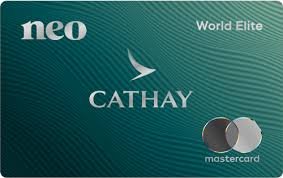
Another interesting travel reward option is the Neo Cathay World Elite Mastercard.
This card earns Asia Miles, which can be useful if you travel to Asia or want to book Oneworld partner airlines like British Airways to London. This is another quirk of points and miles. Using Cathay Asia Miles is the better way to book a British Airways flight to London, England as Cathay charges less taxes and fees compared to using British Airways Avios to book a British Airways flight where taxes and fees can reach $1000.
The card has a base earn rate of 1 Asia Mile per dollar, a welcome bonus that is often 30,000 Asia Miles, and has a higher annual fee of $180.
Assuming the value of Asia Miles is 1.8 cents per point, the math looks like this:
$180 annual fee ÷ 1.8 cents per mile = 10,000 miles
That means you need to spend about $10,000 per year at Costco, or $833 per month, to offset the annual fee.
Again, comparing to the Rogers World Elite Mastercard at a 2% cash back earn rate, if you can redeem your Asia miles for 3 cpp, you’d need to spend $1,500 per month on your Cathay Asia Miles Mastercard to come out ahead.
Against a 1.5% cash back rate, the spend needs to be $1000 per month.
That is a higher Costco spend threshold than the Brim Flying Blue Mastercard.
So, while the Neo Cathay card can be worthwhile, it is a more niche choice.
Consider this card if:
- Your primary points currency is RBC Avion (which can transfer to Asia Miles at 1:1) and you are looking for synergy with a Mastercard at Costco
Note: Amex MR also transfer to Asia Miles but at a less favourable rate of 1:0.75. - You are interested in flying to Asia
- You spend more than $1000 per month at Costco and redeem your points for ~3 cpp

4. RBC WestJet RBC World Elite Mastercard
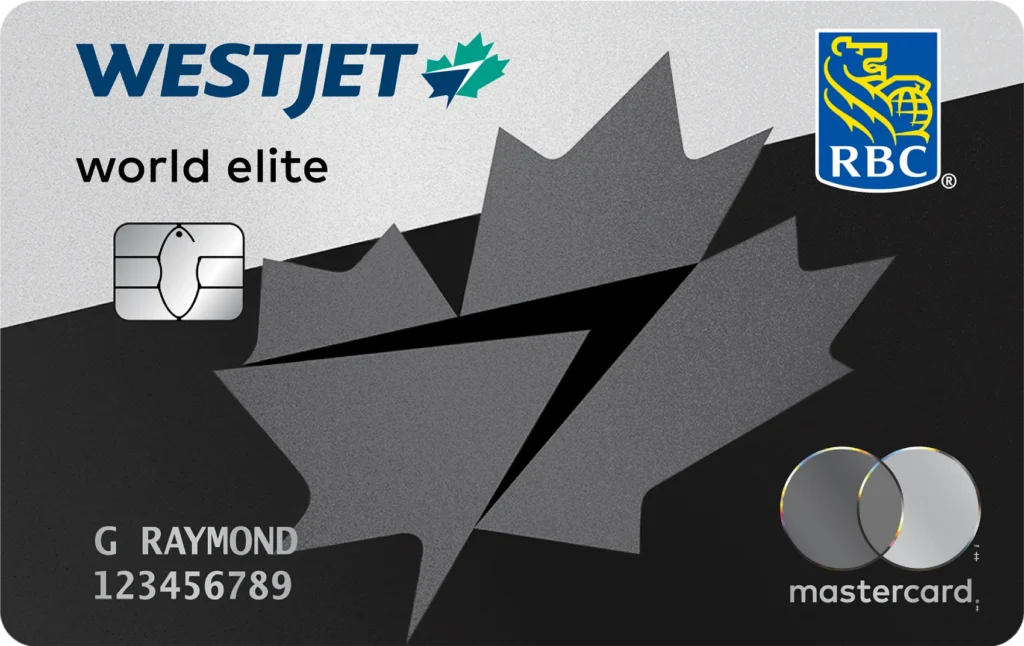
The RBC WestJet RBC World Elite Mastercard is one of the more obvious cards people think of for Costco because it is a Canadian travel Mastercard with a recognizable airline and has a couple of genuinely useful perks.
Key features:
- 1.5 WestJet points per dollar on everyday purchases
- Free checked bags on WestJet flights (when the flight is paid for with the WestJet card)
- A companion voucher
- A welcome bonus of 45,000 WestJet points (equivalent to $450)
- Annual fee of $149
The problem is that WestJet points are fixed-value points.
One WestJet point is worth one cent toward WestJet flights.
So earning 1.5 WestJet points per dollar is essentially like earning 1.5% back, except the “cash back” is restricted to WestJet. That is not bad, but it is not optimal. With the Rogers World Elite Mastercard, you earn 1.5-2% cash back and you are not tied to one airline.
Additionally, to offset the annual fee, you’d need to spend $14,900 per year at Costco, or $1,242 per month. This is the highest spend yet.
However, to be fair to poor old WestJet, this calculation is ignoring the other perks of the card that do have real value (perks that the Flying Blue and the Asia Miles Mastercards do not have). The free checked bag for you and up to 8 guests on the same itinerary can easily save a family of four at least $240 on a single round-trip flight, so this alone more than offsets the annual fee.
Why I Prefer Flying Blue for WestJet Flights
The strange thing is that Flying Blue is the better way to book WestJet flights than WestJet’s own points program.
Remember the $5,000 we saved on March Break flights using ~100,000 Flying Blue miles for a WestJet redemption.
To save that same $5,000 using WestJet points, you would need 500,000 WestJet points.
At 1.5 WestJet points per dollar, that would require $333,333 of spend.
That is a massive amount of spend and is over 3x the spend required on the Brim Flying Blue Mastercard.
Not to get too far off on a tangent, but if you accumulated the 101,500 Flying Blue miles with your Amex Cobalt you’d only need spend $20,300 in the 5x category. That’s 16x less spending required to get the exact same redemption!
I hope this example illustrates the limitation of fixed-value points. They are simple, but they do not have the upside of variable-value airline programs. In a fixed value system like WestJet, as the cash cost of the flight increases, so does the points cost. This is not the case with variable-value systems like Flying Blue (or Aeroplan or British Avios and most other airlines). As the cash cost increases, the points cost remains the same and as such, the value you get actually increases.
The Best Reason to Keep the WestJet Card (and use it at Costco)
The best reason to hold the WestJet RBC World Elite Mastercard is the free checked bags.
I originally got this card for the checked bag benefit, and it has been useful for that purpose. To receive the free checked bag, you must pay for the flight with this card. Interestingly though, in some cases, other points enthusiasts (myself included) have found that the free checked bag benefit still works even when booking a WestJet flight using Flying Blue miles and paying the taxes and fees with the WestJet Mastercard, even though, per the terms and conditions, this shouldn’t be the case.
So my personal approach is simple:
I’d keep the WestJet card for the free bags as long as I am utilizing that benefit when booking economy flights (that normally wouldn’t include a free checked bag). If the annual fee is covered by this benefit alone and you prefer to use this card at Costco for the equivalent 1.5% cash back locked into WestJet points, that is justifiable (even though the Rogers Red WE Mastercard would be slighty more optimized as it earns 1.5-2% back, redeemable for anything).
For those who fly WestJet a lot, value the free checked bags, and just want to offset the cash cost of a flight using a fixed value program, this card can make sense.

5. BMO VIPorter World Elite Mastercard
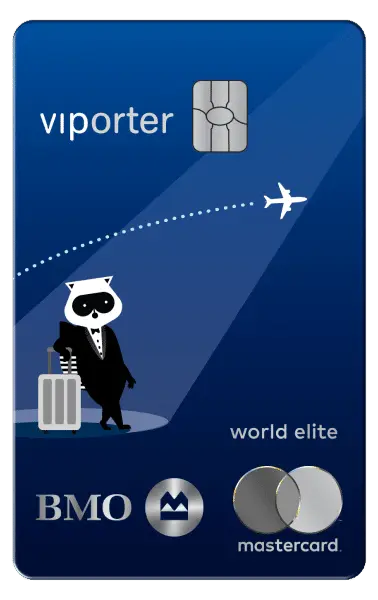
Another option is the BMO VIPorter World Elite Mastercard.
Porter is increasingly relevant for Canadian travellers, especially with its expanding route network and improved onboard experience.
The card offers:
- A welcome bonus around 70,000 VIPorter points
- First-year annual fee waiver
- Free checked bags
- Free seat selection
- Porter elite status benefits
After the first year, the annual fee is $199.
VIPorter points are dynamically priced, which means the number of points required for a flight changes with various factors including availability of seats and the cash cost. A reasonable estimate for VIPorter points is around 1.5 cents per point, though the value can vary.
This card can make sense if you fly Porter often and value the elite-style perks.
If Porter ever joins the Oneworld alliance, this card could be a serious contender and may move up on my list depending on the redemption options.
Why I Still Prefer Flying Blue
As a travel enthusiast and a loyal Costco customer, I am biased toward variable value airline points.
But I think that bias is rational if you know how to redeem points well and your spend at Costco is reasonably high (which mine is).
Flying Blue miles are often conservatively valued at 2 cents per point but it’s relatively easy to book peak-season economy flights and business class flights to Europe at values above 3 cents per point.
So while 1.5-2% cash back is strong, earning Flying Blue miles can be even better.
For me, 3% (or more) back in travel is more fun and more valuable than 2% back in cash.
Now let’s discuss the 3 slightly more advanced strategies…

1. The Visa-to-Mastercard Trick
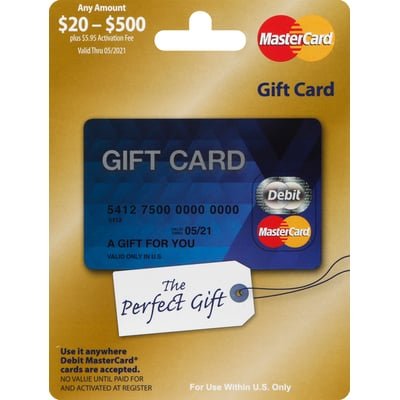
If you are a die-hard optimizer, one option is to use the RBC ION+ Visa to buy Mastercard gift cards at grocery stores or gas stations.
The RBC ION+ Visa (which has an annual fee of only $48) earns 3x Avion points at grocery stores and gas stations.
The strategy is:
- Use the RBC ION+ Visa at a grocery store or gas station to purchase a prepaid Mastercard gift card
- Earn 3x Avion points
- Use the prepaid Mastercard at Costco
The largest denomination is often $500, and there is usually an activation fee of around $5 to $8.
At 3x points, a $500 purchase earns 1,500 Avion points.
If you value Avion points at 2 cents each, those 1,500 points are worth about $30. Even after paying a $5 to $8 activation fee, you still come out ahead.
You might be tempted to ask, “Why not do this with the Amex Cobalt and earn 5x MR points instead?”
I would avoid this temptation. Recently, there have been reports in the points and miles community of people being “Amexiled,” meaning American Express shut down their accounts. Nobody knows the exact trigger, but systematic gift card purchasing at grocery stores to exploit the 5x multiplier is often suspected as one of the behaviours that can create risk.
And losing access to Amex, potentially forever, is not worth it.
The occasional gift card from a grocery store is probably fine. But systematic monthly purchases of large prepaid cards is risky.
RBC seems much less concerned about this type of behaviour, which is why I think the RBC ION+ approach is a more reasonable advanced strategy.
Still, this is not for everyone. It adds friction, and some people simply do not want to deal with prepaid cards, activation fees, and multiple transactions.

2. The Visa-to-Costco Cash Card Trick

Another workaround is to use a Visa you already have on Costco.ca.
Costco.ca accepts Visa, though again you will only earn the base rate of whichever Visa you use (unlike advanced strategy #1 which earned a 3x multiplier on the ION+ because the Mastercard Gift Card is purchased at a gas station/grocery store).
So you can use a Visa card, such as:
- RBC ION+ or Avion Visa Infinite or Avion Visa Infinite Privilege
- TD Aeroplan Visa Infinite or TD Aeroplan Visa Infinite Privilege
- CIBC Aeroplan Visa Infinite or CIBC Aeroplan Visa Infinite Privilege
- Any other Visa you like
Then buy Costco Shop Cards online (in values up to $2000).
The Costco Shop Card is delivered electronically, and you can use it in-store.
This allows you to indirectly use a Visa at Costco and earn your cards base rate of 1 or 1.25 points/dollar depending on the Visa used. Once again though, there is the extra step of purchasing a Costco Shop card online before heading in to shop. That extra step may be too much friction for some.

3. The Costco-to-Grocery Store Trick: Instacart

This last option isn’t truly advanced, it’s just really convenient.
There is one way to use your Amex Cobalt for Costco and have it code as a grocery store.
Instacart.
Instacart allows you to shop at Costco and pay with your Amex Cobalt, and because Instacart codes as food/grocery, you can earn 5x Membership Rewards points.
That sounds amazing, but there is a catch.
Costco prices on Instacart are often higher than in-warehouse prices, and you may also pay service fees, delivery fees, tips, and other markups.
In many cases, the items can cost 10% more.
So this only makes sense if you were going to use Instacart anyway for the convenience.
But I would not use Instacart purely as a points optimization strategy unless the markup is minimal or you are stacking it with credits, promos, or Amex offers.

My Personal Ranking for Costco Spend
Here is how I would think about the options.
Best Simple Travel Option
Brim Air France KLM Flying Blue Mastercard
This is my personal winner.
It is simple, earns a useful airline currency, has strong synergy with Amex, and Flying Blue is excellent for Europe and WestJet redemptions.
If you spend more than $750 per month at Costco and you use Flying Blue miles well, 3 cpp or more, this card is a very reasonable option.
Best Cash Back Option
Rogers Red World Elite Mastercard
This is the best simple, cash back choice, especially for Rogers, Fido, or Shaw customers.
If your spend is low, under $750 per month, this is an easy, no annual fee, way to earn 1.5-2% cash back.
One exception to mention…and then forget
Earlier I mentioned that Costco does not code as a grocery store and thus earns the base earn rate (usually 1-1.5x) of whatever card you choose.
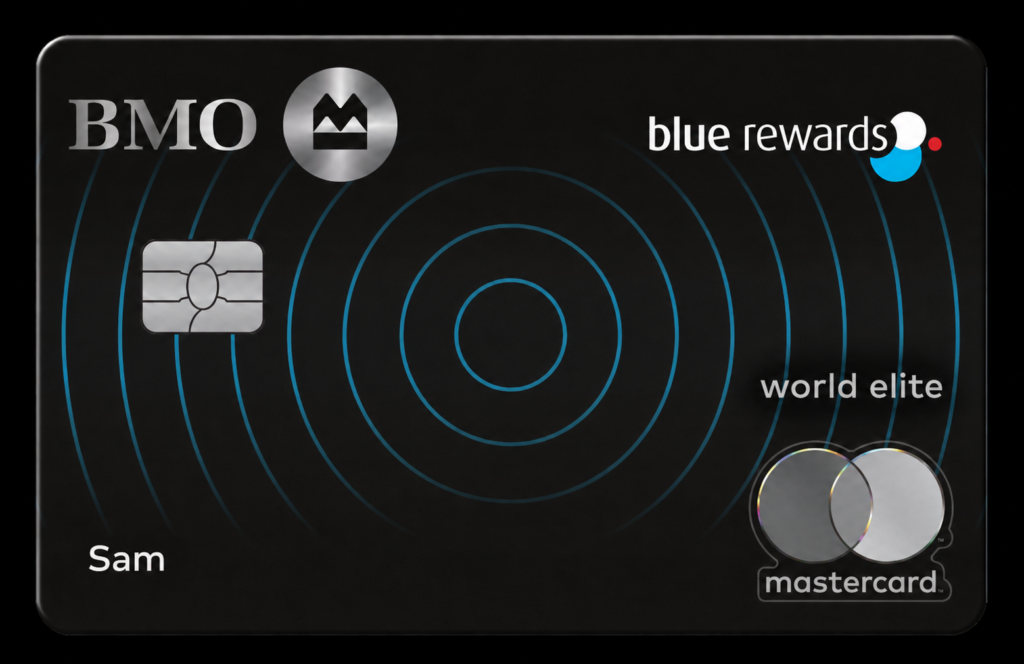
One exception to this is the BMO Blue Rewards World Elite Mastercard.
This card, with an annual fee of $150 advertises an earn rate 2x BMO Blue Rewards points per dollar at “wholesale clubs”, Costco being one.
On the surface, this looks like it beats most of the cards I’ve listed above and matches the 2% cash back of Rogers Red WE Mastercard. However, when we dive a little deeper, we see that isn’t the case.
Two very important caveats of this card. Firstly, there is a $500 per statement cap on the 2x earn rate at Costco, so if you spend more than $500 per month (which I imagine many people do), the earn rate drops to 1x. Second, and more importantly, 1 BMO Blue Reward is not worth 1 cent. It’s worth 0.67cents! So that 2x earn rate, is actually 1.33 cents. And since Blue Rewards are a fixed value point system, this is equal to 1.33% cash back. This falls below the 1.5 points/percent earned via the WestJet WE Mastercard (and BMO doesn’t give you perks like free checked bags on WestJet flights) or the Rogers Red WE Mastercard (which has no annual fee). And its not as strong as the Brim Flying Blue Mastercard that earns only 1 Flying Blue mile per dollar but can easily be redeemed for 2-3 cents per point (or 2-3% cash back equivalent).
The lesson here is that we can’t look at earn rates or multipliers only, we also have to factor in the intrinsic redemption value of a point system. And BMO Blue Rewards is weak from a redemption stand point.
Notable Absence
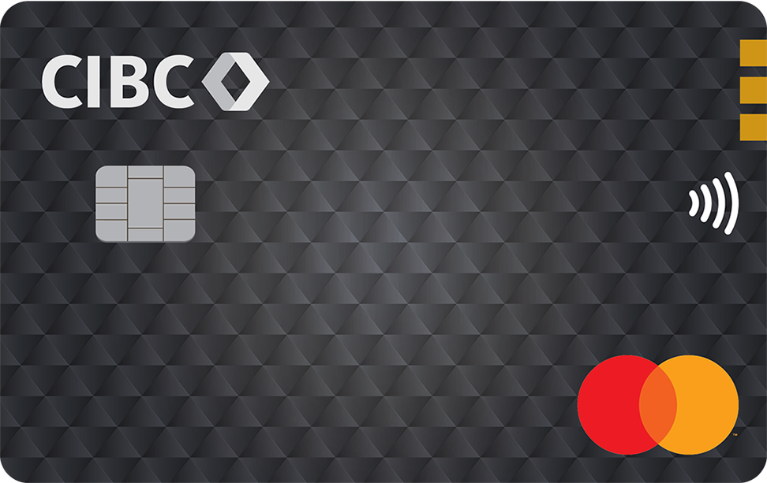
One card that we haven’t mentioned is the one likely used most by Costco shoppers.
On the surface this seems like a reasonably strong cash back card with no annual fee, but once again, the devil is in the details.
Earn Rates:
- 1% cash back base rate including Costco warehouse purchases
- 2% cash back at Costco.ca and non-Costco gas stations
- 3% cash back at restaurants and Costco gas stations
This card is strongest for the 3% cash back at Costco gas stations, but in every other category, we have other cards that are equal or superior.
For Costco warehouse purchases, 1% back is weak especially since this is co-branded card. Any of the 5 Mastercards we discussed have higher earn rates than 1% including the Rogers Red World Elite at 1.5-2% cash back, the WestJet World Elite at 1.5 WestJet points per dollar or even the Flying Blue Mastercard as 1 point is valued at 2-3cpp (or 2-3% cash back equivalent).
Likewise, on Costco.ca where the CIBC Costco card earns 2% cash back, any Aeroplan or Avion Visa earns 1 point per dollar which, when valued at 2-3cpp, is equal to 2-3% back. At non-Costco gas stations, the Amex Cobalt earns 2x MR points per dollar and these have a value of 2cpp (or more) thus making it a 4% return. The RBC ION+ card earns 3x points per dollar and once again this is like a 6% return given that Avion points are valued at 2cpp.
Finally at restaurants, an Amex Cobalt earns 5x points and the RBC ION+ earns 3x points and, assuming a point valuation of 2cpp, this makes the return on spending 10% for the Cobalt and 6% for the ION+. This is well beyond the 3% cash back on the CIBC Costco Mastercard.
Given the plethora of better alternatives, this card isn’t the best choice for use at Costco.

Final Thoughts
Costco is not the easiest merchant to optimize. But depending on your travel goals, monthly Costco spend, level of desired effort, you can take your pick from any of the above options.
With the right strategy, even those giant Costco bills can turn into reasonable rewards or your next flight.
And if you are going to walk out with eggs, milk, a desk chair, Christmas decorations in September, and a portable tire inflator, you might as well earn something useful along the way.

Referrals
If you found this article helpful, please consider using one of my referral links to support the work I do. It costs you nothing extra and by using a referral you are often able to get elevated sign-up bonuses, access to points promotions, or a discount. Most importantly, this helps convince my wife that the hours I spend on this hobby are worth it!
For Amex credit cards earning Membership Rewards, the most powerful and flexible travel points in Canada, like the Cobalt, Gold, Business Gold, Platinum, and Business Platinum please reach out to learn about the best sign up bonus options.
If you shop a lot at Costco and are interested in flying to Europe, the Brim Flying Blue Mastercard is a solid choice and can be applied for using this link.
After your flight is sorted out, you’ll need a hotel room. For Amex credit cards that earn Marriott Bonvoy pointssuch as the Marriott Bonvoy Amex and Marriott Bonvoy Business Amex, please reach out to learn about the best sign up bonus options.
If you are going to book a hotel with cash, check Rove first. Think of Rove like Expedia but instead of earning Expedia points, you earn Rove Miles which are a transferrable points type that has 14 different airline/hotel transfer partners. Rove is a US site that allows you to book hotels (in USD) and gives you up to 10-20x (sometimes even more!) Rove Miles per dollar spent. If the hotel price is similar to what you would have booked elsewhere, use Rove and collect powerful transferrable points.
To supercharge your points earning, use Chexy via this link to pay for things like rent, taxes, professional fees and other expenses that normally cannot go on a credit card.
Once you have accumulated points, you will need to search for flight redemptions efficiently. Roame is the best tool to quickly search multiple programs, multiple destinations, across many dates. Please use the following link and use code PP10 for 10% off the Friends of Roame subscription.
If you are new to points and rewards and want to learn more about optimization and have a personalized approach, please reach out to me for a free one-on-one session.